
Project Shady Intro: Datsun 240Z Time Attack Build
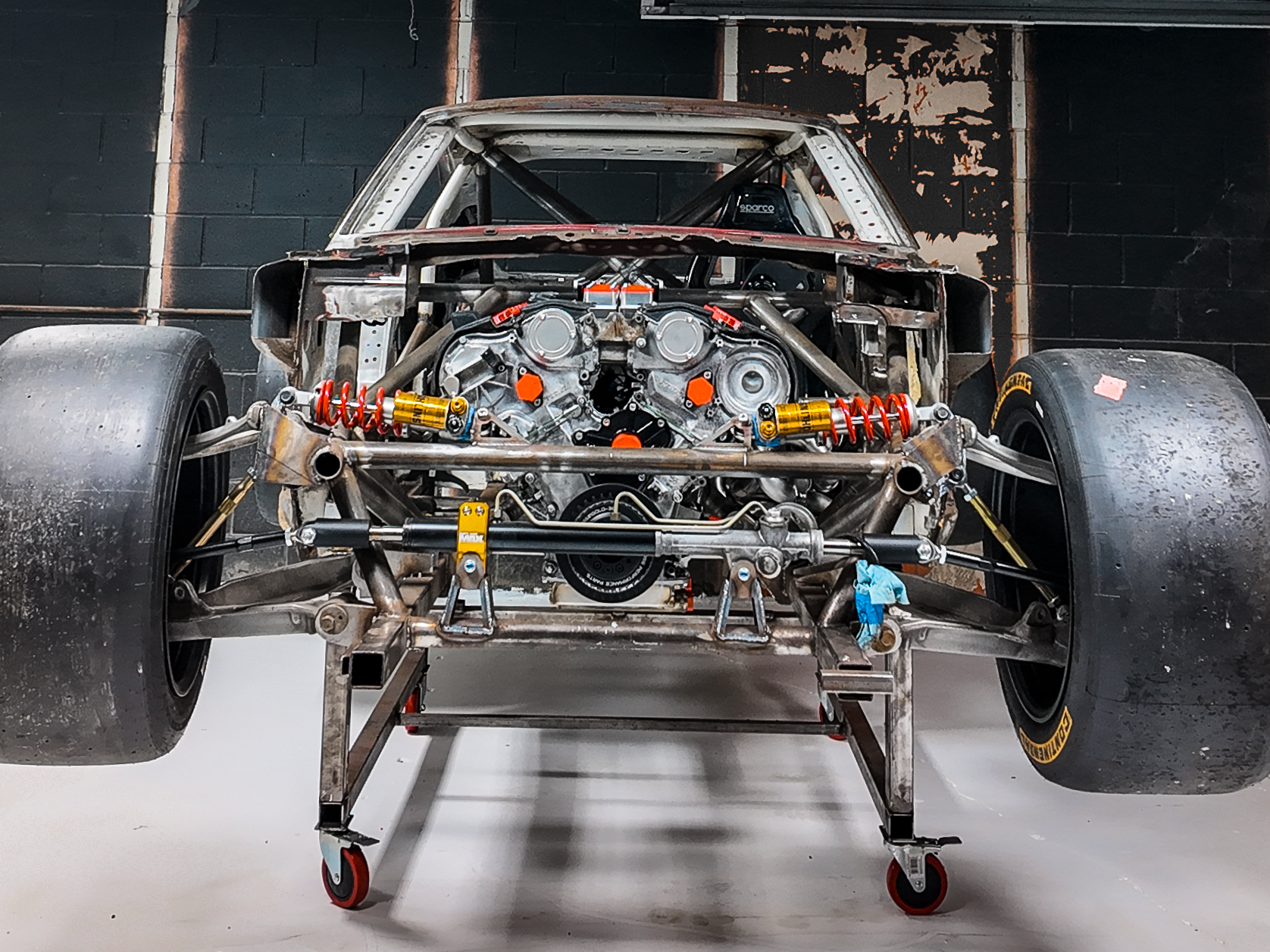
Project Shady: Redefining What a Naturally Aspirated Time Attack Car Can Be
Project Shady began with a question that most people would dismiss as unrealistic: How fast can a naturally aspirated car really be? Not fast for its class. Not fast for its era. But fast in absolute terms. Fast enough to turn laps within a second or two as modern prototype machinery.
This build exists to chase a singular goal — to become the fastest naturally aspirated time attack car in the world.
Why the 1972 Datsun 240Z?
The 1972 Datsun 240Z is more than a nostalgic starting point. It is the first car I ever truly lusted after and It’s a platform defined by simplicity, proportion, and unrealized potential. Long hood, short wheelbase, low roofline — the fundamentals are there. What it lacks from the factory is stiffness, aero efficiency, and the ability to manage modern levels of grip and power. While some would view those shortcomings as a limitation, I viewed them as an opportunity.
Rather than modifying a modern chassis downward, this project builds the 240Z upward — re-engineering it into something closer to a prototype than a street car, while preserving the soul and silhouette that made me fall in love with it in the first place.
Benchmarking Against LMH Hypercars
This car is being built to chases one thing and one thing only, Lap times. A current LMH hypercar is the benchmark. Not because Project Shady will share the same rulebook, but because it shares the same philosophy: extreme aero efficiency, ruthless weight control, and systems engineered to operate at the pinnacle of modern motorsport design.
Suspension geometry, power to weight, aero balance, and structural stiffness are all approached through that lens. If a solution wouldn’t make sense on a modern prototype, it doesn’t make sense here.
Sub-2000 Pounds: No Compromises
Weight is the enemy of everything that matters on track. Acceleration, braking, tire life, direction change — all of it improves when mass is removed. The target for Project Shady is sub-2000 pounds wet, and that number drives every design decision.
Carbon fiber isn’t used for aesthetics. It’s used because it’s necessary. Structure, bodywork, aero surfaces — every component is scrutinized for strength-to-weight ratio. If it doesn’t contribute to performance, it doesn’t belong on the car.
Naturally Aspirated, By Design
In an era dominated by forced induction and hybrid assistance, this build takes the road less traveled on purpose. No turbos. No superchargers. No energy recovery systems. Just RPM, displacement, and mechanical efficiency.
The challenge — and the appeal — is extracting world-class performance without artificial assistance. Throttle response, linear power delivery, and the lightest weight possible matter more here than peak dyno numbers. The engine is designed to live at high RPM, lap after lap, with the kind of reliability demanded by serious competition.
The Mission
Project Shady is not about trends, internet points, or building something comfortable. It’s about pushing naturally aspirated performance further than it’s gone before, using engineering discipline and modern motorsport thinking — all wrapped in the shape of a 1972 Datsun 240Z.
This blog will document the process honestly: the design decisions, the failures, the iterations, and the moments when theory meets reality at speed. The goal is clear. The margin for error is small. And that’s exactly the point.
Welcome to Project Shady.
